
VR and AR advancements are reshaping how we play, weaving fitness, exploration, and storytelling into everyday experiences. From couch-friendly VR workouts to location-based AR adventures, the wave is turning games into more social, immersive journeys as developers pursue accessibility and creators experiment with new interaction models. As hardware becomes lighter and software smarter, developers pursue more accessible devices and richer content, including VR gaming advancements. Industry observers point to virtual reality trends toward higher fidelity visuals, better tracking, and increased comfort for broader audiences. With smarter AI, evolving input methods, and growing content diversity, these technologies promise deeper presence and more meaningful play across devices and communities.
Beyond the shorthand of VR and AR, immersive technologies are redefining how stories are told and games are experienced. This mixed reality approach relies on spatial mapping, advanced headsets, and natural input methods to create presence rather than spectacle. Content creators are embracing spatial computing to weave digital elements into real environments, while developers experiment with cross-platform pipelines. Applications span gaming, training, education, and wellness, leveraging hybrid experiences that blend physical space with responsive digital content.
Immersive Gaming Technology: The Current Landscape of VR and AR
VR and AR have moved from niche experiments to a robust, evolving ecosystem, driven by immersive gaming technology that blends the digital with the physical. Standalone headsets, inside-out tracking, and advanced lenses reduce setup friction while delivering high-fidelity visuals, aligning with broader virtual reality trends that push for accessibility without sacrificing immersion.
On the AR side, smarter glasses, depth sensing, and more accurate world mapping enable overlays that feel contextual rather than intrusive. This maturation enables hybrid experiences where digital content sits naturally atop real spaces, expanding the potential for storytelling, co-op play, and location-aware challenges.
VR and AR advancements: Elevating Presence, Motion, and Social Play
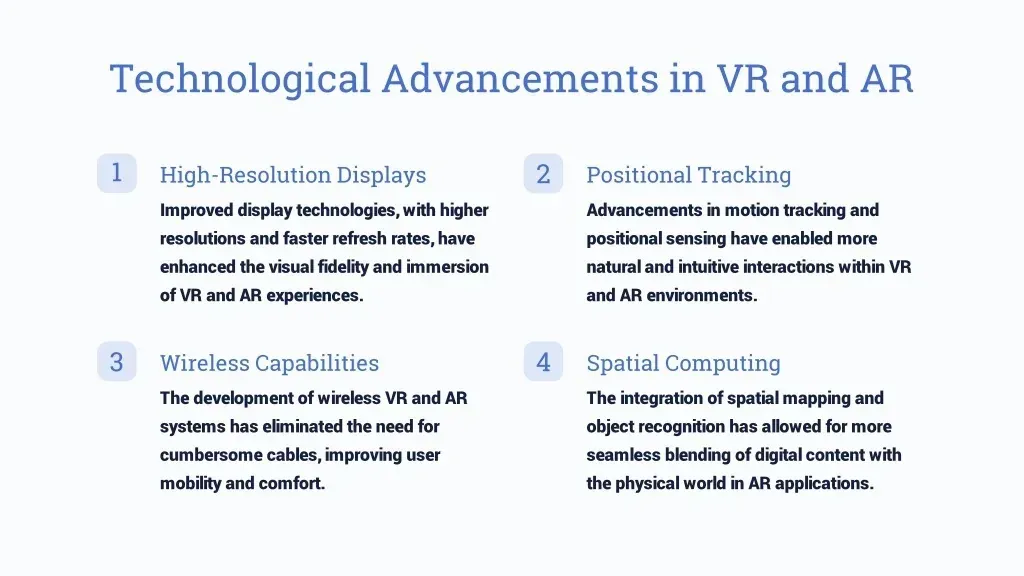
The core appeal of VR gaming advancements lies in a heightened sense of presence. Advances in resolution, refresh rates, and lighter hardware enable longer play sessions without fatigue, while wireless and standalone devices free players to move more naturally, broadening genres that work well in immersive environments.
Key progress in motion tracking and haptics—along with eye tracking and foveated rendering—adds depth to interactions and makes virtual actions feel tangible. Social and collaborative VR spaces are becoming more commonplace, turning concerts, meetings, and cooperative adventures into shared experiences that mirror real-world social dynamics.
AR Gaming Advancements Transforming Real-World Play
AR gaming advancements are turning smartphones and wearable glasses into portals that layer digital gameplay over the physical world. Mobile AR remains core, but depth sensing, improved tracking, and more capable compute platforms are expanding reliability and accessibility for everyday users.
Spatial mapping and persistent environments enable AR experiences that endure across sessions, while location-based games transform parks, streets, and museums into dynamic game boards. As these experiences grow more social, players collaborate to solve challenges and co-create moments that blend digital content with real places.
Designing for Mixed Reality: Hybrid Formats, Accessibility, and Monetization
As hardware improves, developers are rethinking what a game can be, embracing hybrid formats that combine VR core gameplay with AR overlays. This mix opens cross-platform engagement and invites players into more flexible, accessible experiences, with onboarding and comfort options tailored to a wider audience.
New monetization models—subscriptions, evolving content libraries, and premium events—coexist with AI-assisted content creation to speed up development. These shifts empower smaller studios to craft richer augmented reality gaming experiences and maintain ongoing relationships with players across formats.
Challenges and Considerations for Adoption: Costs, Comfort, Privacy
Despite momentum, VR and AR face real-world barriers. Cost remains a hurdle for entry, and even as hardware improves, affordability and incremental upgrades shape adoption curves. Virtual reality trends continue to emphasize comfort, easier setup, and scalable graphics to reach broader audiences.
Comfort, health, and privacy considerations are ongoing concerns. Motion sickness, eye strain, and wearability require thoughtful design, while spatial computing raises questions about data use and safety in public or shared spaces. Addressing these issues will demand coordinated hardware refinement, ethical guidelines, and clear platform policies.
The Road Ahead: The Next 3–5 Years for VR and AR, Connectivity, and AI
Looking forward, the next 3–5 years are expected to bring wider adoption of standalone devices, lighter wearables, and more social, mixed-reality experiences that feel increasingly like real-world gatherings. This evolution aligns with ongoing virtual reality trends and helps bridge the gap between home play and location-based or shared experiences.
Advances in 5G, edge computing, and cloud streaming will enable high-fidelity VR/AR experiences across more devices and budgets. AI-assisted content pipelines, smarter world-building, and scalable production tools will accelerate development for both VR gaming advancements and AR gaming advancements, fuelling new genres, training, and entertainment possibilities.
Frequently Asked Questions
How are VR gaming advancements shaping immersive gaming technology today?
VR gaming advancements are delivering higher fidelity visuals, lighter headsets, and improved motion tracking, boosting immersion. With inside-out tracking and wireless designs, setup is simpler and players feel more present in virtual environments. These improvements expand the reach of immersive gaming technology across genres and experiences.
What are the current virtual reality trends that influence AR gaming advancements and cross-platform play?
Current virtual reality trends include standalone headsets, better optics, and more robust social and cross-platform ecosystems. These trends spur AR gaming advancements by pushing smarter wearables, depth sensing, and seamless content overlays on the real world. The result is hybrid experiences that blend VR and AR in cohesive ecosystems and shared spaces.
How are AR gaming advancements changing real-world play on smartphones and glasses?
AR gaming advancements turn ordinary spaces into interactive game boards using camera overlays and improved world mapping. Smartphones remain highly accessible, while dedicated AR glasses offer hands-free play and more natural interactions, expanding social multiplayer and location-based play. This progression makes real-world AR more engaging and scalable.
Why is immersive gaming technology central to social VR and collaborative experiences?
Immersive gaming technology emphasizes presence, high-fidelity visuals, and tactile feedback, enabling social VR spaces that feel like real gatherings. Enhanced avatars, spatial audio, and shared perspectives support co-op play, virtual concerts, and collaborative tasks in virtual environments.
How are hybrid formats and new monetization models shaping VR gaming advancements and augmented reality gaming experiences?
Hybrid formats that blend VR gameplay with AR challenges broaden cross-platform engagement and content longevity. New monetization models—subscriptions, content libraries, and premium events—are expanding revenue streams for both VR gaming advancements and augmented reality gaming experiences.
What practical steps can developers take to adopt wireless standalone devices and eye-tracking within VR gaming advancements and immersive gaming technology?
Start with a clear hardware and UX plan, emphasizing comfort, accessibility, and gradual onboarding. Use wireless standalone capabilities and eye-tracking where feasible, adopt modular toolchains, and leverage AI-assisted content creation to speed prototyping, aligning with VR gaming advancements and immersive gaming technology trends.
| Area | Key Points |
|---|---|
| Introduction | VR and AR advancements are changing how we play by blending digital and real-world experiences, redefining game design, storytelling, and social interaction. The shift includes new input methods, better optics, and smarter AI, driving richer experiences, more accessible hardware, and a broader slate of genres that mix virtual and real play. |
| The Current Landscape of VR and AR | VR is maturing toward standalone headsets with inside-out tracking and advanced lenses, reducing setup friction. AR is expanding beyond smartphones to smarter glasses with better depth sensing and world mapping for seamless overlays in real environments. |
| VR Gaming Advancements Shaping Play | Immersion-driven improvements include higher resolutions, faster refresh rates, and lighter hardware. Key trends: wireless/standalone devices, improved motion tracking and haptics, eye tracking with foveated rendering, social VR spaces, and a broad content range from rhythm and fitness to narrative and puzzles. |
| AR Gaming Advancements Transforming Real-World Play | Mobile AR overlays and tracking improve reliability; AR glasses enable hands-free play; spatial mapping and persistent environments allow virtual objects in real spaces; location-based AR turns real places into game boards; experiences are increasingly social and co-created. |
| Design and Monetization Shifts | Hybrid VR/AR formats, improved onboarding and accessibility, new monetization models (subscriptions, ongoing content updates, premium events), and AI-assisted content creation to accelerate world-building and design. |
| Challenges and Considerations | Cost and accessibility concerns, comfort and health issues, content fatigue, and privacy/safety in spatial computing. Solutions involve hardware refinement, thoughtful design, and clear platform policies. |
| The Road Ahead (3–5 Years) | Expect wider standalone adoption, more comfortable wearables, richer social VR/AR experiences, broader mixed-reality applications beyond gaming (training, education, entertainment), and AI-assisted design and content pipelines. 5G, edge computing, and cloud streaming will expand high-fidelity play across devices. |
Summary
Conclusion